Archive for category Gaming

Iron Skies Devblog – Trying out the skyfighter

One of the great things about Unity is its versatility, most notably that it runs in a browser. The Webplayer version builds from the exact same project as the Windows or OSX download does, and the plugin to run it is one of the easiest, most automatic things I’ve ever downloaded. Now, Iron Skies may end up a little too much for browser play, but this also has the interesting advantage of providing actual playable demonstrations to the devblog!

Launch Skyfighter Test

This demo has no gameplay yet I’m afraid, it merely demonstrates skyfighters: the little aerofoil craft that can swing the tide of battle. While this isn’t a flight sim and is mainly about airships, I have been tweaking the skyfighter controls relentlessly and have just overhauled them again. The basic movement and control mechanics are important to nail down for all player-controlled craft, and that I’m not too far off now. Once it feels good, I can start getting into the gritty detail of combat and gameplay.

Space Exploration & Orbiter

While riding the highways and byways of the hypertext stream (oh grief, please don’t ever let me use that sentence again) I recently encountered two unique Space-themed titles of a more exploratory and scientific kind than many of us are used to. As an intrepid explorer myself (I occasionally drive to Wales), I was very interested to delve into them.

For anyone with the desire to become the next pulp-scifi space captain (and possessing the rudimentary minimum imagination necessary to read a book), Space Exploration : Serpens Sector is a work-in-progress worth a look. Fundamentally, the game focuses on a top-down view of an area of star systems which you can visit with a simple click. However, each journey costs fuel to get there (and of course, to get back). Fortunately, your friends at the home station are on hand to reward your exploring efforts with more fuel, so it forms a principle resource.

All this would be pretty dull were it not for the fact that every new star system holds something different; contact with new races, hanging out in bars on asteroids, having your crew abducted… every voyage plays out like an episode of Star Trek. Of course, with this incredible scope these encounters are text-based, but as stated earlier this gives it quite a literary feel and the entirely random universe varies well.

Additionally, battles are fought out using a detailed (if sometimes ponderous) combat engine of a similar look and feel to the galactic map. A nice touch is that you can ask your crew for advice in battle, advice that is actually worth listening to. The version I played was the tenth, and current, build, which seemed very stable and gave no problems. And unlike many indie developers that feel cornered into using awful DRM in their games, Metal Beetle have stated the game will be free; only the content-adding expansions will cost anything. Read more about that here.

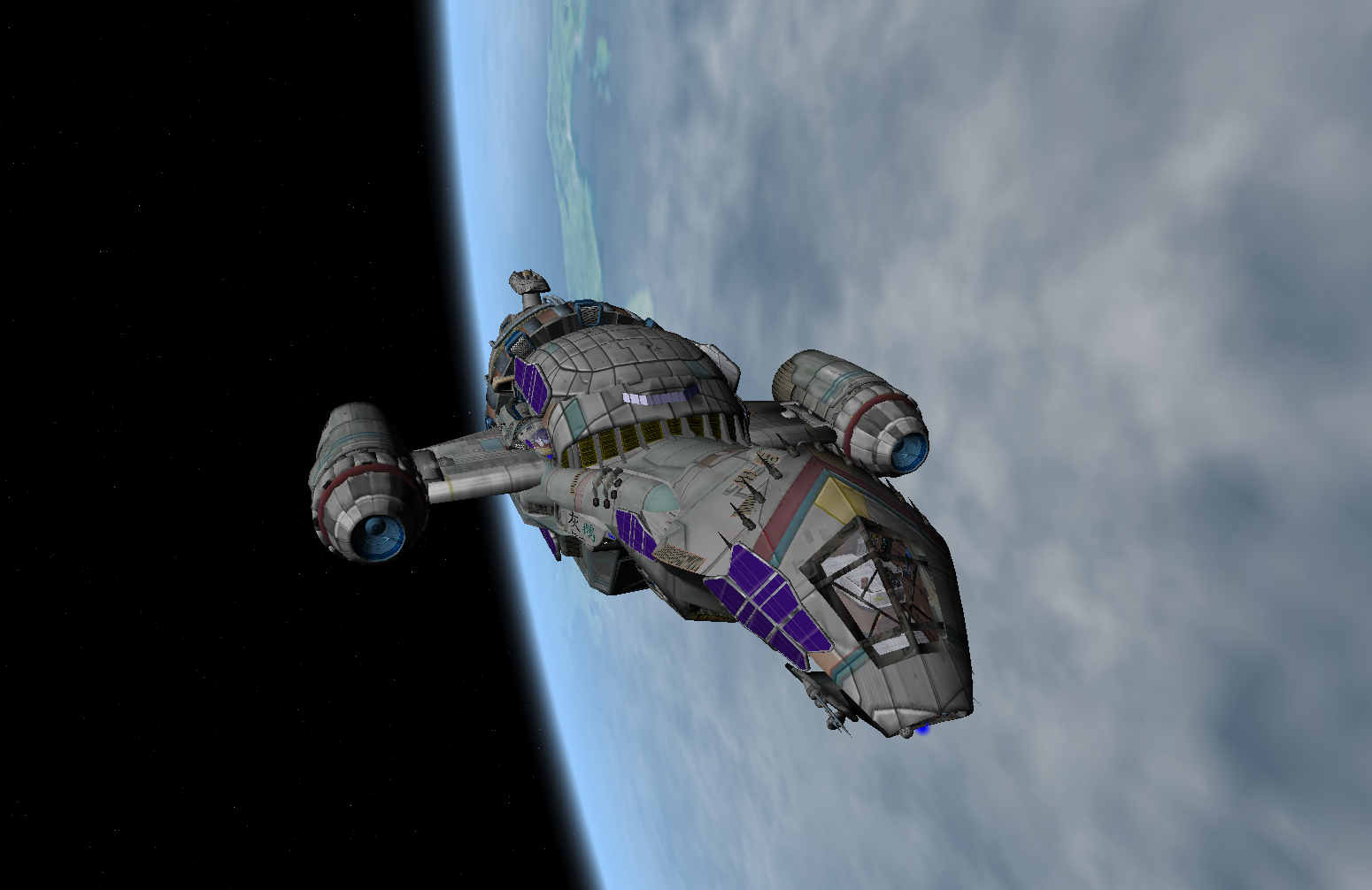
The second game, which is not so much a game as an immensely complex freeware simulator of space flight, is called Orbiter. Featuring the Space Shuttle, the ISS, plus a number of theoretical craft of the near future, it almost reminds me of the first time I played Xplane back in its old days. It has that charm, that strange attraction that comes from simulating just about everything that makes you go “I wonder what happens if I do this.”

Orbiter is 100% a simulator. One way to tell this is that I have only really been able to figure out how to pitch, bank and yaw. After connecting a joystick I discovered I could throttle the forward thrusters. Yet it had me spinning in orbit for half an hour, fascinated, attempting to try this and that to see just how easy it is to knock a shuttle out of orbit. I was expecting the slightest goof to send me plummeting toward the big blue thing, but here it would seem it’s almost as hard to hit a planet as it is to miss it; several times I found myself accelerating away from Earth accidentally at ridiculous speeds. This is the nature of orbits, although one always wonders what is accurate and what isn’t in a simulator: especially when my triumphal crash into the pacific ocean actually made me bounce a kilometre back up into the air.

Orbiter is a geek’s toy, no doubt about that. But it does come with a plethora of preset scenarios and recorded sessions to help you see it all without having to first attain a Masters in astrophysics. You can watch the shuttle launch in the skilled hands of an expert, which gives you an idea of the scale and speed of the real thing. Many other situations and some very fine graphics (for the most part) make it an educational, often enjoyable indulgence; especially for space nerds like me that could reel off all the planets and moons from the age of five.

My only real gripe was the lack of sound, even in the atmosphere (but as you’re mostly in space this isn’t a biggie). The lack of planetary detail beyond Cape Kennedy is a shame too, but an understandable limitation. I would have liked to have seen better simulation of impact with the ocean/land at 100 metres per second, but I guess they aren’t supposed to show shuttles disintegrating in a game of this nature.

Overall, both of these are labours of love and definitely niche programs, but it is refreshing to see an experience you just can’t find elsewhere!

Iron Skies Devblog: New Start!

Welcome to the first of the development blog posts for my game project, Iron Skies!

This still just looks like a mess, alex

So first up, a bit about what Iron Skies is. It started out as a university project in Blitz Basic 3D, circa 2006. In 2009 I decided to make a completely new version from scratch in the fantastic Unity3D game engine.

The game is based on my much-talked (but so far still public-elusive) Cloudgazer universe. You play an airship captain, able to take command of anti-gravity battleships and nimble skyfighters, in a battle for supremacy of this groundless world. The cool thing about the game is that not only can you fight naval style real-time aerial combat in all manner of craft, you can actually build the airships yourself using a component system. This same system even allows damage to be taken based on hit location, and your ship’s stats in every attribute depend on the condition of these components. Shoot up someone’s engines and they’ll be reduced to a crawl, and even sink them by destroying the antimass tanks: provider of lift!

The current stage of the project sees me finally having a set of almost finished airship components in Unity, which have been compounded into a ship that can be flown about. You can also switch craft at this stage, which is an odd feature to see this early (especially as it probably won’t actually feature in the gameplay). However this helps debugging no end, and also ensures proper separation between Player and Craft in the code, aiding both AI and multiplayer architecture.

A Review of Saboteur

The circumstances that lead me to play games are often bizarre. Some, such as the LAN gem Line of Sight : Vietnam, began as seemingly ill-fated parental buys. Others such as the enjoyable indie title Iron Grip : Warlords was found while browsing the steampunk works of its concept artist.

But Saboteur, I am almost ashamed to say, was a simple case of a quick Play.com “Top PC games” search, in the lead up to Xmas. Sounded like an interesting premise, so I thought I’d go for it. Part of me wanted to play it simply because I was curious to see a recent game. It had been a while. And overall, I must say I wasn’t disappointed.

You play the part of a member of the French Resistance, during WWII in occupied Paris. Not an immensely likable one, unfortunately, as he is possessed of a terrible Irish accent and exists in a world written with the kind of complexity and depth of character one might associate with a Michael Bay film. But of course, that’s why we have Nazis in the game in the first place; so you know your good from evil (notwithstanding the Brits of course; even when they’re your allies they’re still apparently bad news).

Saboteur’s most obvious comparison is with GTA, but I found myself repeatedly reminiscing on (the more grown-up) Mafia. That was likely due to the setting of 1930s cars and quirky jazz most likely, but both have immersion and atmosphere in spades. I love sandbox games, no matter how trendy they get. Saboteur does this side admirably; you get to go running around Paris as much as you like, sneaking around / blowing up a variety of Nazi installations in a number of different possible ways. The main plot manages to be both un-intrusive and very easy to pick up again; for example, the occasional reminder of the plot missions come via a shadowy-looking “pssst-here’s-a-secret-note” guy, true to the 50’s Hollywood style to which the game adheres.

Apart from its apparent lack of sophistication, my gripes are mainly with the save system. PC reviewers and gamers alike usually blame this kinda thing on “oh it’s what you get with console ports” but these days, that’s bull! Consoles have the exact same save system, it’s nothing short of a weak attempt to stop players cheating with saves. Half Life 2 allows you to do this. If it broke gameplay, somebody would have noticed by now. It is in fact one of those things game designers think will be a problem but actually isn’t. Whereas their ’solution’ is, as always, a pain in the ass. I had to re-complete (three times as it happened) a big fat mission involving sneaking into a crypt, then fighting alongside the Resistance, simply because the first time I died and didn’t have time to do it again, and the second time the game decided it was having an off-day and crashed. The problem was even worse before I figured out that only when I’d seen the “Mission Complete!” message, was it safe to save and carry on later without discovering I’d taken a back-step.

Overall, though, I am still enjoying the odd game of Saboteur as much as any other I play. There are some great moments of sneaking past Nazis worthy of those classic film moments. And to all that find the setting appealing, I encourage you to give it a try.

A Question of Multiple Installs

The big issue for LAN gamers is that big grey area of copyright: multiple installs. Over recent years this issue has got sorta out of hand, but as much as the copyright jockeys are generally being asshats about it, they do have valid points.

What am I on about? Okay, you buy a copy of a game. You can play on one PC fine. Then you want to play your brother or something, on a network game between his laptop and your PC. But you can’t, you need another copy of the game. Is this reasonable?

In short, no.

There are some valid reasons why you are being prevented, and self-righteous trolls will bemoan them to stem the endless tide of whining CD-Key scroungers. But there is no excuse for this, because a number of games have comprimised beautifully. It is a simple case of laziness, and the neglect of network gamers in fear of the unscrupulous online pirates. Read the rest of this entry »

Online Gaming

First up, I’d just like to say that I don’t think online gaming is without some merit.

That sounds like real negative forshadowing for something that generally receives nothing but praise from most, but I’m not having a mindless bash at online play merely because I have a rubbish connection. Or because the online player can take me to the cleaners on even my favourite games. It’s much more general than that.

Online play, while touted as being more social and outgoing than the ‘lonliness’ of single-player, is actually pretty solitary. You know what? Playing with people is so much more fun when you’re not sitting in the house on your own. It’s called LAN, and with modern laptops this is more feasible than ever.

I know not everyone can do this, and being a developer I have more computers than I should so I’m inclined to be a LAN gamer. But it’s not just LAN. Split screen and turn based games are even easier; Trackmania being the current favourite (turn-based racing at its best). I always enjoy it so much more playing games with people who are present and I actually know and/or care about.

Online games aren’t forbidden a look in among all this, I just don’t think they’re the big positive social train they’re made out to be. Also, it may come as a shock to those who think that bots are a thing of the past and that World of Warcraft is how all games will be someday, but I’ve deduced some fundamental logical inevitables:

  1. AI will sooner or later surpass humans. In my opinion they’re already more fun because they don’t hack, or spend the whole time telling you you’re doing it in an inefficient way and not using the best gunz. Regardless, AI will eventually be as good (and optionally better) than humans. [1]
  2. Role Play Games are fun because you’re the only one that can save the world. If everyone in the world is also saving it as well, all your greatnesses average out and you’re left back in the real world where everyone is samey and bored. This is called Lex’s Hypothesis on Why World Of Warcraft Sucks. [2]
  3. People on The Internets are all dickholes [3].

I’m not just getting at online games for the hell of it, I just think the industry needs a kick up the jacksie to remember that there’s greater things a game can aspire to than Battlefield 2. Players of ‘private session’ style games like my humble self are finding our choices slim these days, because developers/publishers think that online is where the cash is. This is probably true. But that doesn’t mean I have to like it!

Space Station Sim

I buy more games than I play. I think everyone does this a little. But I also buy games I know aren’t that great, just because I’m curious. I’m curious to know what’s out there; what the virtual world offers us today, how it ticks, and what I could do to improve it. This has led me to buy games that I rarely play, and take chances on titles with such bad marketing and presentability that their only other buyers will be confused pensioners and clueless parents. Raph Koster calls it ‘Designeritis’: the almost scientific need to acquire and analyse as many games as possible, then toss them aside like an ungrateful teenager.

Well one such whim was a game called Space Station Sim, recently on offer at my local GAME for a rather amusing £1.95. How can I say no to research at that kind of price? Titles that do something I’ve not otherwise had a chance to do always perk my interest, regardless of how interesting the activity may appear at first glance. Making a spacestation sounded intriguing, so I payed the price of a bare sandwich and took a look. Review follows! Read the rest of this entry »

Game Design Thoughts

In my mind, most developers seem to design games back to front these days. So cornered by the publisher’s demands to maximize on the trends, they’re churning out permutations of a current formula entirely on purpose. The advertising is a dead givaway of this mentality; it’s some other game, but this time with aliens. Or cowboys. No, wait, it’s probably still just WW2.

Rather than to take a game that’s done already and think of what you can tag onto it to make it different (the ‘EA approach’?), I think the best way to come up with a design is to think of something that would be fun to do then turn it into a game (the Wonderous Child approach).

Spore (despite its publisher) is a good example of the latter: Will Wright didn’t think “lets combine Pacman, Populous, Civilization and GalCiv 2 and figure out a theme for it”. It was clearly more a case of “lets make a game about evolution, because the Discovery Channel is cool”. More designers need to go back to this. There are so many great experiences games could be giving us if they could halt making WW2 shooters for just five minutes.

A list of awesome things no game lets you do yet*:
- Freely explore a human body in a microscopic ship like in Innerspace
- Offer a ‘crew camaraderie’ experience running a small ship/spaceship online
- Let you experiment building an orbital vehicle (at a component-placing level) to try and reach space

(*) – As far as I’m aware, anyhow